

The Best Heavy Duty Phone Cases for Ultimate Protection
When someone says "heavy duty," you probably picture a clunky, ugly phone case. And yeah, some rugged cases definitely put function way ahead of form. But the best ones today manage to blend serious protection with smart, even sleek, design. Figuring out what separates a truly tough case from a standard one is the key to protecting your investment, especially as phones get more expensive and, let's be honest, more fragile.
A real heavy-duty case is more than just a thick plastic shell. It’s an engineered system designed to pull impact energy away from your phone’s sensitive guts and screen. That requires a specific mix of materials, solid structural design, and proof that it actually works. Without those things, you're just carrying around a false sense of security.
Defining What Makes a Phone Case Truly Heavy Duty
To figure out which heavy-duty cases are actually the best, we need to set some ground rules. These features are non-negotiable for top-tier protection and are exactly what we'll be looking at throughout this guide.
- Verified Certifications: The most important credential here is MIL-STD-810G (or the newer 810H standard). This is a U.S. military specification that involves brutal testing against drops, shocks, and vibrations. It’s objective proof that a case can take a beating.
- Advanced Material Science: A single layer of cheap plastic isn't going to do the job. The best cases use a dual-layer system, usually a hard polycarbonate (PC) outer shell to fight off scratches and a flexible thermoplastic polyurethane (TPU) inner core to absorb shock.
- Intelligent Design Features: This is where the smart engineering comes in. Look for reinforced corners (often with little air pockets for cushioning), a raised lip around the screen and camera to prevent direct hits, and button covers that feel clicky and responsive.
When you think about the headache of needing to learn how to fix a broken phone screen, you start to see why this level of protection really matters.
Market Demand and Material Choices
The demand for this kind of serious protection is growing, and fast. The global market for rugged cases is blowing up as more people—both consumers and professionals—realize they need something that can handle demanding environments. The market is expected to hit US$1,371.1 million by 2033, climbing at a solid 7.1% CAGR. That trend says it all: people are ready to invest in protecting their pricey devices from expensive accidents.
For maximum impact resistance, a hybrid construction is essential. The hard outer shell deflects the initial force, while the soft inner layer acts like a cushion, absorbing the residual shockwaves that would otherwise damage your phone.
Here’s a quick breakdown of the two main materials you'll find in the best heavy-duty phone cases:
| Material | Primary Role | Key Characteristic |
|---|---|---|
| Polycarbonate (PC) | Outer Shell / Structure | Rigid, scratch-resistant, deflects direct impact |
| TPU (Thermoplastic Polyurethane) | Inner Core / Bumper | Flexible, shock-absorbent, provides excellent grip |
At the end of the day, a truly heavy-duty case is more than its marketing claims—it's a product of proven engineering. This becomes even more critical for specialized devices like foldables. You can learn more about how we approach this in our guide on why your investment needs a heavy-duty metal case.
Comparing The Core Features Of Heavy Duty Phone Cases
Trying to sort through the specs on the best heavy duty phone cases can feel like a chore, but a handful of core features always separate the real deal from marketing fluff. The first step to making a smart investment in your phone's safety is understanding what's behind the certifications, materials, and design choices. When you see how each piece works, it becomes clear how they all lock together to form a complete shield for your device.
The most trusted benchmark for rugged protection is the MIL-STD-810G certification. This isn't just some sticker a company buys; it's a brutal series of tests cooked up by the U.S. military to make sure gear survives in the field. Cases that pass have been put through the wringer, simulating the kind of real-world punishment that gives you confidence they'll actually work when you need them to.
This concept map breaks down the three pillars of a great heavy-duty case: certification, materials, and design.
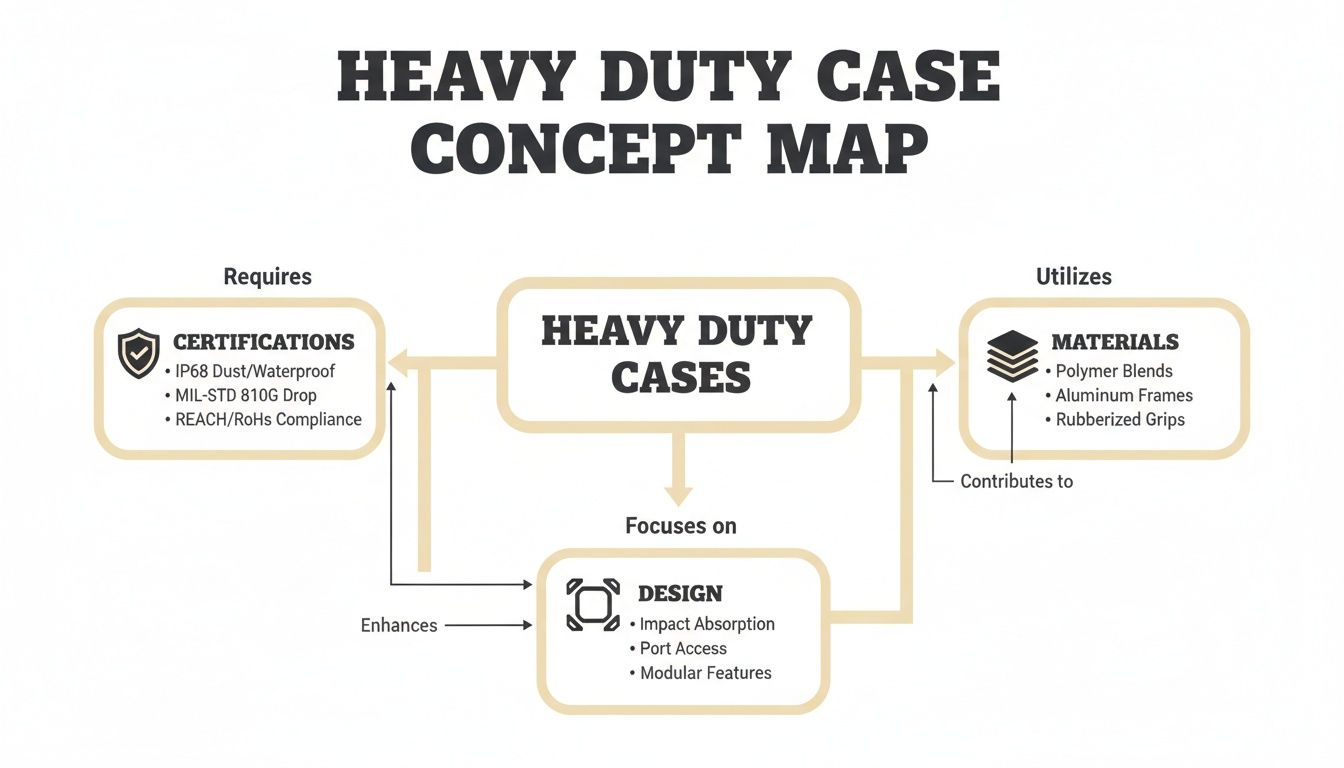
As you can see, these three elements have to work in harmony to create a legitimate defense system. A case can be made of the strongest stuff in the world, but without smart design to channel away the force of an impact, it's practically useless.
Material Science: The Foundation Of Protection
A case's materials are its first line of defense, and the best ones use a dual-layer strategy that combines a hard outer shell with a soft inner core. This hybrid approach is leagues better than a single slab of plastic.
- Polycarbonate (PC): This rigid material forms the outer skeleton. Its main job is to fend off scratches, scrapes, and sharp, direct hits. Think of it as armor plating.
- Thermoplastic Polyurethane (TPU): This is the flexible, rubbery inner layer that acts as a shock absorber. When your phone hits the ground, the TPU compresses and scatters the kinetic energy so it never reaches your phone's delicate guts.
There's a reason this combination leads the pack. In a market projected to hit USD 15,115.27 million by 2035, materials like silicone and TPU are king, making up 57% of global sales. It’s a testament to their proven effectiveness for people who demand real protection.
Design Innovations That Save Your Screen
Great materials are only half the story. It's the smart structural design that directs impact forces away from your phone’s most fragile spots. For anyone serious about protection, these features are non-negotiable.
Raised bezels are a prime example. That tiny, elevated lip around the screen and camera lenses means that if your phone lands flat, the case—not the glass—takes the hit. This simple trick prevents thousands of dollars in screen repair bills.
Reinforced corners are another must-have. Phones almost always land on a corner when they fall, so top-tier cases pack extra cushioning right there, often using what's called "air pocket" technology. These small air pockets compress on impact, acting like tiny airbags to soak up the concentrated force.
The point of a heavy-duty case isn't just to cover the phone; it's to create a crumple zone. Just like in a car crash, the case is built to absorb and redirect destructive energy so the precious cargo inside stays safe.
Port covers are also a signature of rugged design. These little flaps block dust, dirt, and moisture from getting into your charging port and speakers, which is an absolute lifesaver for anyone working in construction, landscaping, or other messy jobs. Digging into specific water-resistant and waterproof ratings for other electronics can give you a good idea of how well a case is truly sealed.
To help you connect the dots between technical specs and real-world value, this table breaks down how each key feature works and what it actually does for you.
Heavy Duty Feature Comparison and Impact
| Feature | Technical Function | Primary User Benefit |
|---|---|---|
| MIL-STD-810G | Passes military-grade tests for drops, shock, and vibration. | Verified, real-world proof that the case can survive harsh conditions. |
| Dual-Layer Materials | A hard PC outer shell and soft TPU inner core work together. | Resists scratches while providing superior shock absorption from drops. |
| Reinforced Corners | Extra material or air pockets at the corners absorb impact. | Protects the most common impact point, drastically reducing screen shatter risk. |
| Raised Bezels | A lip extends above the screen and camera lenses. | Prevents direct contact between glass and flat surfaces during a fall. |
| Port Covers | Flexible seals cover the charging port and speaker grilles. | Keeps dust, dirt, sand, and moisture out of your phone's sensitive openings. |
| Hinge Protection | A dedicated mechanism shields the foldable phone's hinge. | Prevents catastrophic damage to the most complex and fragile part of the device. |
Ultimately, a truly protective case is a system where every component has a specific job. When you see these features listed, you know the manufacturer has thought about more than just looks.
Specialized Defense For Foldable Phones
Foldable phones like the Samsung Galaxy Z Fold or Google Pixel Fold have a unique weak spot: the hinge. A standard case leaves this intricate mechanism totally exposed, creating a massive vulnerability.
The best heavy duty phone cases built for foldables integrate solid hinge protection. These are engineered mechanisms designed to shield the hinge from drops and stop debris from getting inside, which can mess up the folding motion for good.
Key Hinge Protection Styles
- Sliding Hinge Covers: These covers glide along with the phone as it opens and closes, giving you seamless protection without making it feel bulky.
- Spine Protection: Some cases use a fully articulated spine that covers the entire length of the hinge, delivering maximum shock absorption.
This special focus is critical. Without dedicated hinge coverage, a foldable phone is dangerously at risk, no matter how tough the rest of the case is. Check out our guide on the top protective features every foldable case needs to learn more.
Matching a Rugged Case to Your Lifestyle
Technical specs and military certifications are important, but let's be real—the best heavy-duty case is the one that actually fits your life. A case built for a construction site has completely different priorities than one designed for a chaotic family home. The key is to pick protection that feels practical, not like you've strapped a brick to your phone.
This is about looking beyond the spec sheet and thinking about your real-world risks. When you match a case’s features to your specific environment, you’re investing in the right kind of durability. The goal is a perfect balance where serious protection meets everyday usability.
The Construction Professional
For anyone working on a construction site, a phone isn't just a phone—it's a critical tool facing constant, extreme threats. The biggest dangers are high-impact drops onto concrete or steel, plus the ever-present menace of fine dust, sawdust, and dirt getting into every nook and cranny.
This kind of environment demands the highest level of protection you can find. A simple drop-rated case just won't cut it when a fall from scaffolding is a real possibility, or when sawdust can easily work its way into a charging port and cause damage. You need total environmental sealing and maximum impact absorption.
Essential Features for Construction Pros:
- Complete Port and Speaker Coverage: Look for cases with tight, integrated flaps that seal the charging port, speaker grilles, and any other openings. This is non-negotiable for keeping destructive particles out.
- Exaggerated Corner Protection: Reinforced corners with big air pockets or extra-thick TPU are vital. Since most phones land on a corner when dropped, this is your first and most important line of defense against a shattered screen.
- Textured, Grippy Exterior: A rugged, non-slip texture is crucial for keeping a firm hold on your device, especially when you're wearing gloves or working in damp conditions. A secure grip is what prevents the drop in the first place.
For this user, functionality trumps sleekness every single time. The case is a piece of essential safety gear, just like a hard hat. It has to be an uncompromising shield against the harshest daily grind.
The Outdoor Adventurer
The outdoor adventurer—whether you're a hiker, cyclist, or kayaker—faces a different set of challenges. Drops are definitely still a concern, but the main threats often come from the elements: sudden downpours, accidental splashes, mud, and impacts against rocks or tree roots.
Protection here needs to be tough but also lightweight and accessible. A case that's too bulky becomes a real pain on a long trek. The ideal solution blends serious weatherproofing with a design that doesn't add a ton of weight to your gear.
Critical Features for Outdoor Adventurers:
- IP-Rated Water and Dust Resistance: Even though many phones have some water resistance, a heavy-duty case with its own IP rating (like IP68) provides a crucial second layer of defense against being submerged or caught in a heavy storm.
- Multi-Layer Shock Absorption: A hybrid case that combines a hard polycarbonate shell with a soft TPU interior is perfect for this. The rigid outer layer deflects impacts from rocks, while the soft inner layer absorbs the shock to protect the phone's delicate internals.
- Lanyard Attachment Point: A simple feature, but incredibly useful. Securing your phone with a lanyard can stop it from getting lost during activities like climbing or kayaking and prevents drops before they even happen.
The Busy Parent and Everyday User
You don’t have to be scaling a mountain to need heavy-duty protection. For busy parents, a phone is constantly at risk from the chaos of daily life—getting knocked off a counter, dropped in a parking lot, or dealing with sticky fingers and spilled juice.
The challenge here is finding a case that delivers reliable, all-around protection without turning the phone into a clunky mess. It needs to handle frequent, low-to-mid-height drops and be easy to clean, all while staying pocket-friendly and working with daily tech like wireless chargers.
A case that's too rugged might just get left at home, which defeats the whole purpose. The best heavy-duty cases for this lifestyle are the ones that pack serious protection into a manageable and practical design.
Recommended Features for Daily Life:
- Substantial Raised Bezels: A prominent lip around the screen and camera lenses is the single most important feature for preventing damage from flat-surface drops, which are all too common in homes and offices.
- Wireless Charging Compatibility: Protection shouldn't mean sacrificing convenience. Modern heavy-duty cases are engineered to be tough yet thin enough to support Qi wireless charging without any issues.
- Easy-to-Clean Materials: Look for cases made from smooth, non-porous polycarbonate or TPU. These materials can be wiped down easily to get rid of grime, food, and whatever else the day throws at them.
Specialized Protection for Foldable Phones
Foldable phones like the Samsung Galaxy Z Fold and Google Pixel Fold have completely changed the game, but their incredible designs introduce a unique weak spot: the hinge. Standard cases just aren't built to handle it. The hinge is the mechanical heart of your device, and leaving it exposed is asking for trouble. A generic heavy-duty case might protect the front and back, but it does absolutely nothing to shield that hinge from a direct hit or the grit that can grind down its delicate parts.
This isn't just a small oversight—it's a critical design failure in most cases. Your phone's hinge is packed with tiny, moving components that are incredibly vulnerable to damage from dust, sand, or even pocket lint. A single piece of grit can mess with the smooth folding action, leading to an expensive repair bill. And a direct drop on the hinge? That could be catastrophic, potentially killing the folding mechanism for good.
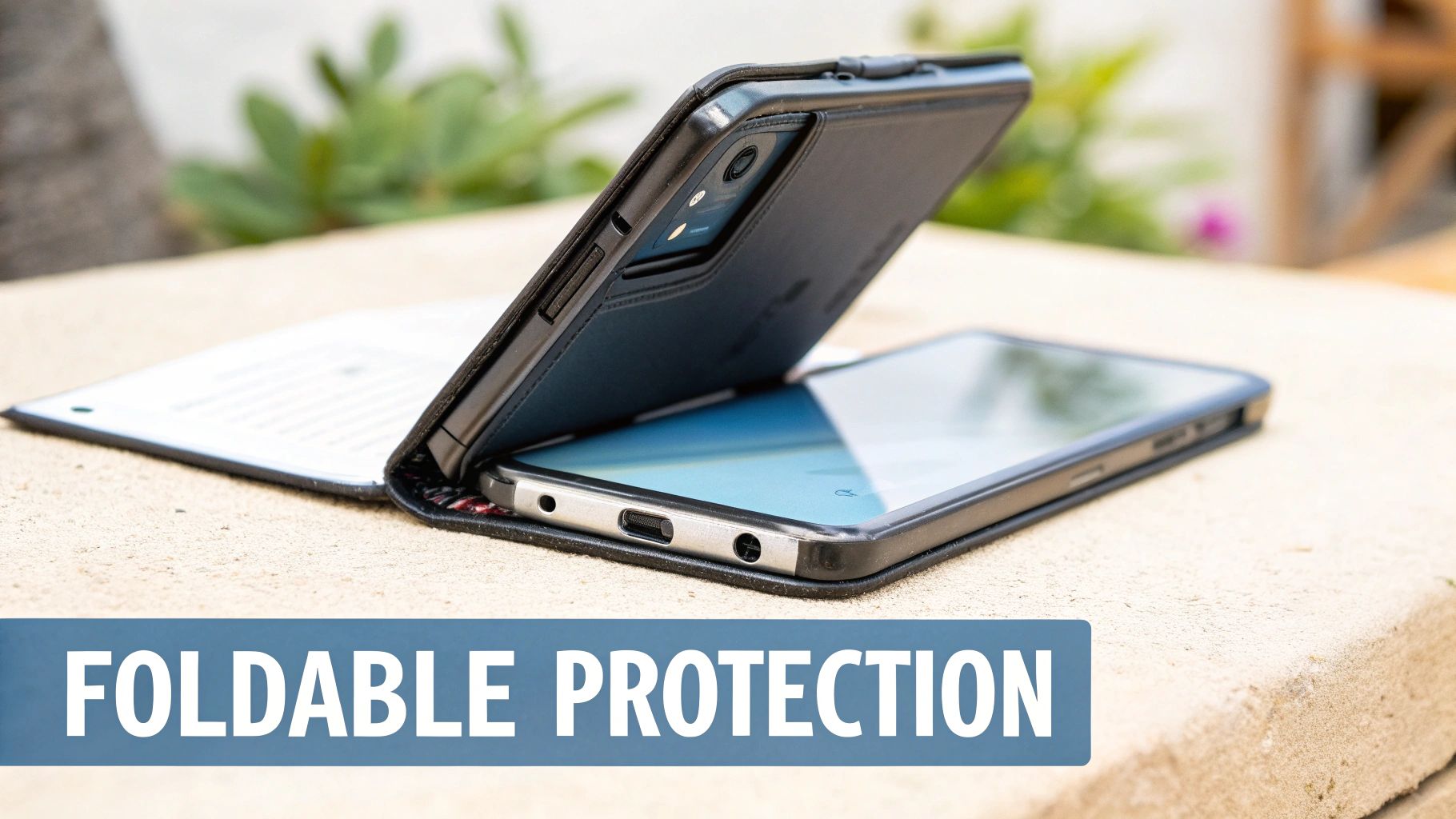
This is precisely why specialized protection is non-negotiable for anyone who owns a foldable. The best heavy duty phone cases for these devices are engineered with dedicated hinge protection that acts as a full-coverage shield, absorbing impact and sealing out debris without getting in your way.
Comparing Hinge Protection Designs
Not all hinge protection is created equal. Case makers have come up with a few clever ways to secure this vulnerable point, each finding a different balance between ruggedness, feel, and bulk. Knowing the difference is the key to picking a case that actually works for you.
The two most common and effective designs you'll see are the integrated spine and the sliding cover. Each one takes a distinct approach to keeping that hinge mechanism safe.
Hinge Protection Style Comparison
| Design Style | How It Works | Primary Advantage |
|---|---|---|
| Integrated Spine | A fully articulated piece that covers the entire hinge when closed, often with a spring-loaded or magnetic mechanism. | Offers maximum shock absorption and a seamless, premium feel, often adding extra functionality like a stylus holder. |
| Sliding Cover | A cover that glides along the hinge as the phone opens and closes, providing continuous coverage in every position. | Maintains a slimmer profile while ensuring the hinge is never exposed to debris or direct impacts. |
Think of an integrated spine as an outer backbone for your phone. When you close the device, the spine locks into place, creating a rigid, impact-resistant barrier. This design is fantastic at spreading the force from a drop across the entire length of the case instead of letting it all concentrate on one tiny spot.
A sliding cover, on the other hand, is a more streamlined solution. This design moves in sync with the phone’s folding motion, making sure the hinge is always shielded without adding a lot of bulk. It's a great choice for blocking out dust and sand while keeping the phone easy to slip into your pocket.
The goal of hinge protection isn't just to cover the mechanism; it's to create a dynamic shield that moves with the device. It must provide robust protection when closed and disappear seamlessly when open, allowing the foldable experience to remain fluid and intuitive.
What to Look For in a Foldable Case
Beyond the hinge, a few other factors are critical to giving your foldable the complete protection it needs. First up is a precision fit. Because foldables have two distinct halves, a poorly designed case can feel loose or shift around, which totally compromises its protective ability.
Look for cases that offer a secure, snap-on fit for both sides of the phone. You also need to make sure the case has strong corner protection and raised bezels around both the front screen and the main inner display. This lifts the glass away from the impact surface, no matter how your phone lands. As you can imagine, a foldable phone needs foldable protection that considers every possible angle.
Finally, pay attention to the materials. A combination of a hard polycarbonate (PC) shell and a shock-absorbing thermoplastic polyurethane (TPU) interior is the gold standard. This dual-layer approach delivers the same rugged durability you'd find in the best cases for traditional slab phones, but it’s molded specifically for the unique shape of a foldable. If you prioritize these features, you can feel confident your innovative device is properly shielded from the realities of daily life.
How to Properly Evaluate a Heavy Duty Phone Case
Picking out a truly heavy-duty case takes more than just glancing at a feature list. If you want real, dependable protection, you need a smart way to evaluate the claims before you buy and a quick method for testing the case once it's in your hands. This guide gives you a straightforward checklist to make sure your investment actually guards your device.
A good evaluation starts long before you hit the "add to cart" button. It’s about looking past the marketing hype, digging for real-world proof, and seeing what other people have actually experienced. Skip this step, and you’re just trusting an advertisement.
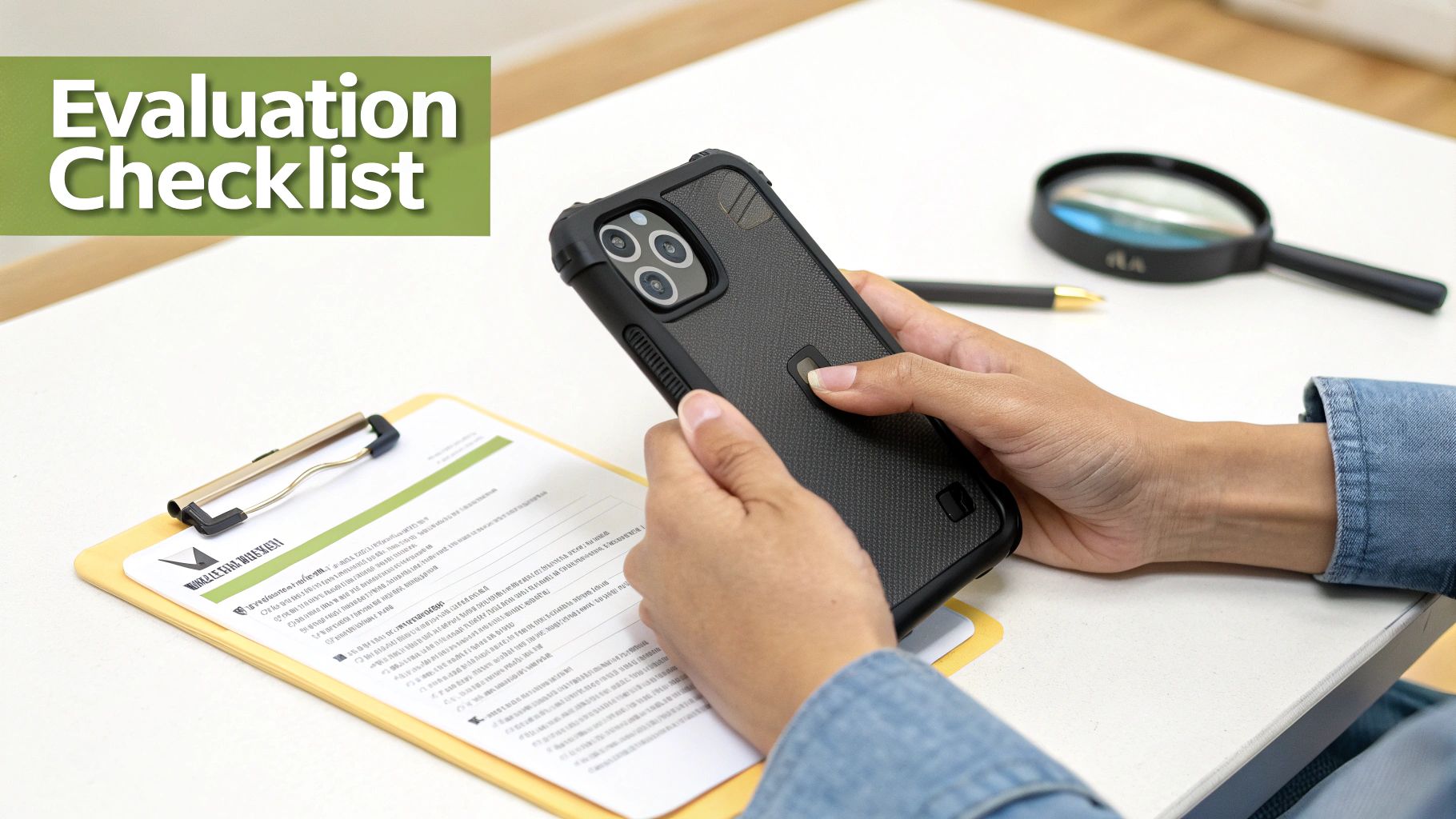
This process helps you see beyond the flashy pictures and focus on what really matters for genuine protection.
Your Pre-Purchase Inspection Checklist
Before you spend a dime, run any potential case through this checklist. It’s a systematic way to tell the difference between well-engineered products and those held together by empty promises.
-
Verify MIL-STD-810G Claims: A military-grade stamp is a massive selling point, but not all certifications are created equal. Look for brands that give you specifics about their testing, like the exact drop height (4-6 feet is standard) and how many drops the case survived. Vague mentions of "military-grade" without any data should make you skeptical.
-
Scrutinize User Reviews for Specific Scenarios: Don’t just look at the star rating. Dig into the reviews and search for keywords that matter to you, like "drop," "concrete," "construction," or even "kids." This is where you'll find priceless insights into how a case performs in a real accident, not some sterile lab test. Pay special attention to reviews where someone describes a specific fall and how their phone came out of it.
-
Examine High-Resolution Product Images: Get in close and zoom in on those product photos. Look at the corners—do they look thicker or have visible air pockets for cushioning? Check for a serious raised lip around both the screen and the camera lenses. You should also inspect the port covers to see if they look like they’ll form a tight, protective seal.
A truly protective case leaves clues in its design. Thickened corners, precise cutouts, and a noticeable screen bezel are not just stylistic choices; they are deliberate engineering decisions that reveal a commitment to durability.
Following these steps builds a solid foundation for your decision, helping you weed out the weak contenders before they even get to your doorstep.
Post-Purchase Fit and Function Test
Once your new case arrives, the evaluation isn't over. A few simple, non-destructive tests will confirm you made the right call and that the case fits your device like a glove. Think of it as your final quality control check.
The Fit and Feel Assessment
- Check for Gaps: Snap your phone into the case and carefully inspect all the edges. It should feel snug, with no gaps, creaks, or wiggle room. A loose fit can seriously compromise shock absorption when the phone takes a hit.
- Button Responsiveness: Press every single button—volume up, volume down, and the power button. You should feel a satisfying, tactile "click" and get an immediate response. Buttons that feel mushy or are hard to press are a sign of poor design and will drive you crazy in daily use.
- Port and Speaker Access: Plug in your charging cable. It should connect securely without the case getting in the way. It’s also a good idea to make a quick test call to be sure the microphone and speaker cutouts are perfectly aligned and aren't muffling the sound.
Running through these quick checks ensures the case doesn’t just protect your phone but also works seamlessly with all its functions. This final step gives you complete confidence that your phone is wrapped in one of the best heavy-duty cases you can get.
Common Questions About Heavy Duty Cases
Even after breaking down all the technical details and real-world scenarios, a few questions always pop up. Picking the right heavy-duty case means cutting through some common myths and understanding the real trade-offs. This section gives you straight answers to the things we hear most often.
Getting these last few details ironed out will help you invest in protection with total confidence, knowing exactly what you're getting. Let's tackle the big ones.
Will a Heavy Duty Case Make My Phone Too Bulky?
It's true that heavy-duty cases are thicker than those paper-thin fashion cases, but modern designs are much smarter about balancing protection with portability. The best brands use a hybrid approach—think a tough polycarbonate outer shell fused with a soft, shock-absorbing TPU core. This combo soaks up impact energy without adding a ton of unnecessary mass.
Many top-tier cases now feature ergonomic grips and tapered edges that actually improve how the phone feels in your hand. The key is to find cases that earn their protective ratings through clever engineering, not just by slapping on thick, clumsy layers of plastic. This ensures they can still slide into a pocket without a fight.
Does a MIL-STD-810G Rating Guarantee My Phone Won’t Break?
A MIL-STD-810G certification is the best seal of approval you can get for durability, but it's not an unbreakable promise. What it means is that the case survived a series of specific, controlled stress tests, like being dropped multiple times from a set height onto a hard, flat surface.
The real world, however, is completely unpredictable. A freak accident—like your phone landing corner-first on a sharp rock or taking a truly catastrophic impact—can still cause damage.
Think of a MIL-STD-810G rating as a massive upgrade in durability. It drastically improves your phone's chances of surviving tough situations, but no protection is ever absolute.
Can I Still Use Wireless Charging With a Heavy Duty Case?
This one comes down entirely to the case's design and how thick it is. Some older, extra-chunky cases can block the charging signal, but almost all modern, premium heavy-duty cases are engineered to be fully compatible with Qi wireless charging.
When it comes to magnetic mounts and accessories like MagSafe, things get a bit more specific. The case needs to be designed with magnets in mind.
Key Compatibility Factors to Check:
- Explicit Qi Support: The product page should say it works with wireless chargers. If it doesn't, be skeptical.
- Material Makeup: Cases made with metal plates or alloys can block charging signals. Polycarbonate and TPU are generally fine.
- Integrated Magnets: For MagSafe or similar systems, the case absolutely must have its own magnetic ring built in. This ensures a solid, reliable lock for both charging and mounting.
Always look for cases that specifically mention integrated magnets or are designed with a thickness that supports a strong magnetic link. This way, you don't have to choose between top-tier protection and the features you use every day.
At FoldifyCase, we build our heavy-duty collections to put these questions to rest. We offer MIL-STD-810G rated protection for foldable phones that doesn’t get in the way of wireless charging or a perfect, slim fit. Check out our specialized cases and find the right balance of rugged defense and modern convenience at https://www.foldifycase.com.