

Phone Case with Port Covers: Why You Need It for Every Phone
A phone case with port covers is exactly what it sounds like: a protective case with built-in flaps or plugs designed to seal off your phone's charging port and headphone jack. These little features are the unsung heroes of phone protection, acting as a shield against dust, sand, moisture, and pocket lint. They're the simple solution to preventing the kind of sneaky damage that leads to charging failures and expensive repairs.
Why Port Covers Are a Modern Smartphone Necessity
Think of your high-end foldable phone as a fortress. It’s an incredible piece of engineering, but its open ports—like the USB-C charging slot—are basically unguarded gates. This is why a case with port covers has become a non-negotiable accessory for keeping your device healthy for the long haul.
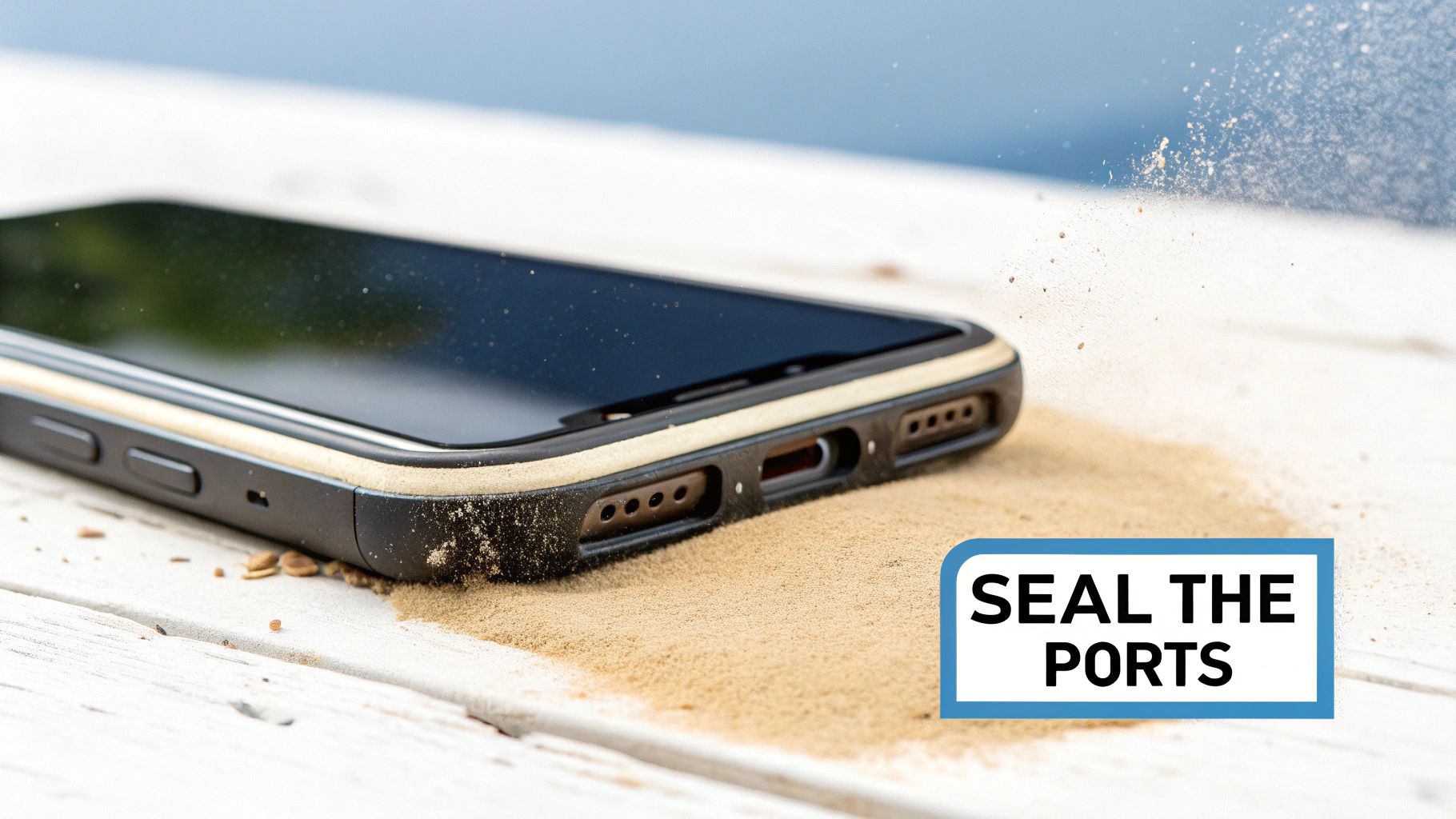
It’s like a knight's armor; even the smallest gap can be a critical weakness. Your phone’s ports are constantly exposed to a whole army of tiny invaders that can cause silent, creeping damage over time.
The Common Enemies of Open Ports
You’d be surprised how hazardous everyday environments are for your device’s most sensitive entry points. Without protection, these ports become tiny collection bins for all sorts of gunk. The most common threats are:
- Pocket Lint and Debris: That soft fluff from your pocket seems harmless, right? Wrong. It can get packed so tightly inside the charging port that it physically blocks the cable from making a secure connection.
- Dust and Dirt: If you work in construction, have a workshop, or even just enjoy hiking, fine dust particles are everywhere. They can easily get inside and scratch up the sensitive internal contacts.
- Sand and Grit: A single day at the beach can be a death sentence for an unprotected port. A few tiny grains of sand can cause immediate and often irreversible damage.
- Moisture and Humidity: Even if your phone is "water-resistant," that doesn't mean it's immune. Ambient moisture from a rainy day or a humid climate can seep into open ports and cause slow-growing corrosion on the charging pins.
It’s about understanding the need to safeguard your gear, just like someone in a tough work environment relies on a universal protector for their boots. Your phone deserves that same level of defense.
A major study on smartphone repairs revealed that charging port issues are one of the top five most common hardware failures. The leading cause? You guessed it—debris getting stuck inside. Sealing those ports is a simple preventative step that tackles this problem head-on.
The Consequences of Neglect
Ignoring this vulnerability can lead to a whole cascade of frustrating and costly problems. What starts as a small annoyance can quickly blow up into a major issue that messes with your daily routine. The most common result is trouble charging or transferring data. We’ve all been there, wiggling the cable just right to get a connection—a classic sign of a blocked or damaged port.
In the worst-case scenario, the damage becomes permanent, forcing you to get a professional repair that can set you back a pretty penny. By grabbing a phone case with port covers, you’re making a small but incredibly smart decision to seal off those weak points. This isn't just a gimmick; it's a fundamental investment in your phone's longevity.
For a closer look at other critical safeguards, you can check out our guide to the top protective features every phone needs.
The Hidden Benefits of Sealing Your Smartphone Ports
Sure, keeping pocket lint out of your charging port is an obvious win, but the real advantages of a phone case with port covers go much deeper than that. These tiny, integrated seals are your phone's first line of defense against the kind of slow, creeping damage you don't even notice—until it's too late. They protect your device from a lot more than just dust bunnies.
Take a subtle enemy like humidity, for example. Even if your phone has a decent water-resistance rating, it's not immune to the corrosive effects of moisture in the air. Over time, humid air seeping into an open port can cause micro-corrosion on the delicate charging contacts inside, leading to those frustrating connection problems that seem to pop up out of nowhere. A sealed port stops that process cold.
Real-World Scenarios and True Peace of Mind
The value of a sealed port becomes crystal clear when you're in a demanding environment. Picture a contractor on a dusty worksite. Tiny particles of drywall, wood, or dirt are floating everywhere. Without a port cover, your phone's charging jack acts like a tiny vacuum, sucking in abrasive grit that can scratch and permanently damage the sensitive pins inside.
The same goes for a day at the beach. Fine sand is famous for getting into everything, and it only takes a few grains inside a USB-C port to cause an immediate—and often irreparable—hardware failure. In these moments, a simple flap cover gives you total peace of mind, letting you focus on your work or fun without worrying about your expensive tech.
A common complaint we hear is that dreaded 'loose plug' feeling, where the charging cable no longer clicks securely into place. This is almost always caused by a buildup of compacted gunk inside the port that physically blocks a solid connection.
By keeping your ports sealed, you dramatically reduce the risk of these common headaches, saving yourself from having to pay for a costly service like an iPhone charging jack repair.
Maintaining a Rock-Solid Connection
A clean, debris-free port isn't just about preventing a total meltdown; it's about maintaining peak performance every single day. A port that's consistently sealed ensures you get a solid, reliable connection for both charging and data transfer every time you plug in. That simple feature helps preserve that satisfying "click" for years to come.
Here's how a sealed port contributes to your phone's long-term health:
- Prevents Pin Degradation: It blocks moisture and other corrosive elements that slowly eat away at the metal contacts.
- Ensures Full Contact: It stops debris from creating a physical barrier between your cable and the port's internal pins.
- Reduces Physical Strain: Without compacted lint forcing you to jam the cable in, you avoid putting unnecessary stress on the port's internal structure.
Ultimately, this proactive defense keeps your phone charging efficiently and reliably, extending its functional lifespan.
Enhancing Overall Structural Integrity
Beyond just protecting the port itself, those little integrated covers can actually make the entire case more durable. A well-designed phone case with port covers creates a more complete and sealed enclosure around your phone, and this has a surprising impact on drop protection.
When a phone gets dropped, the impact energy travels through the case's frame. An open slot for a port is a structural weak point. By closing that gap, the port cover helps unify the case's structure, allowing it to better distribute and absorb the force from a fall. It might seem like a minor detail, but it’s one more element that reinforces the case’s primary job: keeping your phone safe from impacts.
How To Choose The Right Port Cover Case For Your Foldable
Picking the right case with port covers for your foldable phone isn't just about looks. It's about striking that perfect balance between solid, real-world protection and everyday convenience. Let's be honest, not all port covers are made the same, and a clunky, poorly designed one can turn from a feature into a daily frustration fast.
This is especially true when we're talking about premium foldable phones. The engineering on these devices is so precise, and the case needs to match it. It can't just protect; it has to feel like a natural part of the phone's unique design. Let's break down what really matters so you end up with a case that helps, not hinders.
Still on the fence? This simple guide can help you figure out if you actually need port covers based on how you use your phone day-to-day.
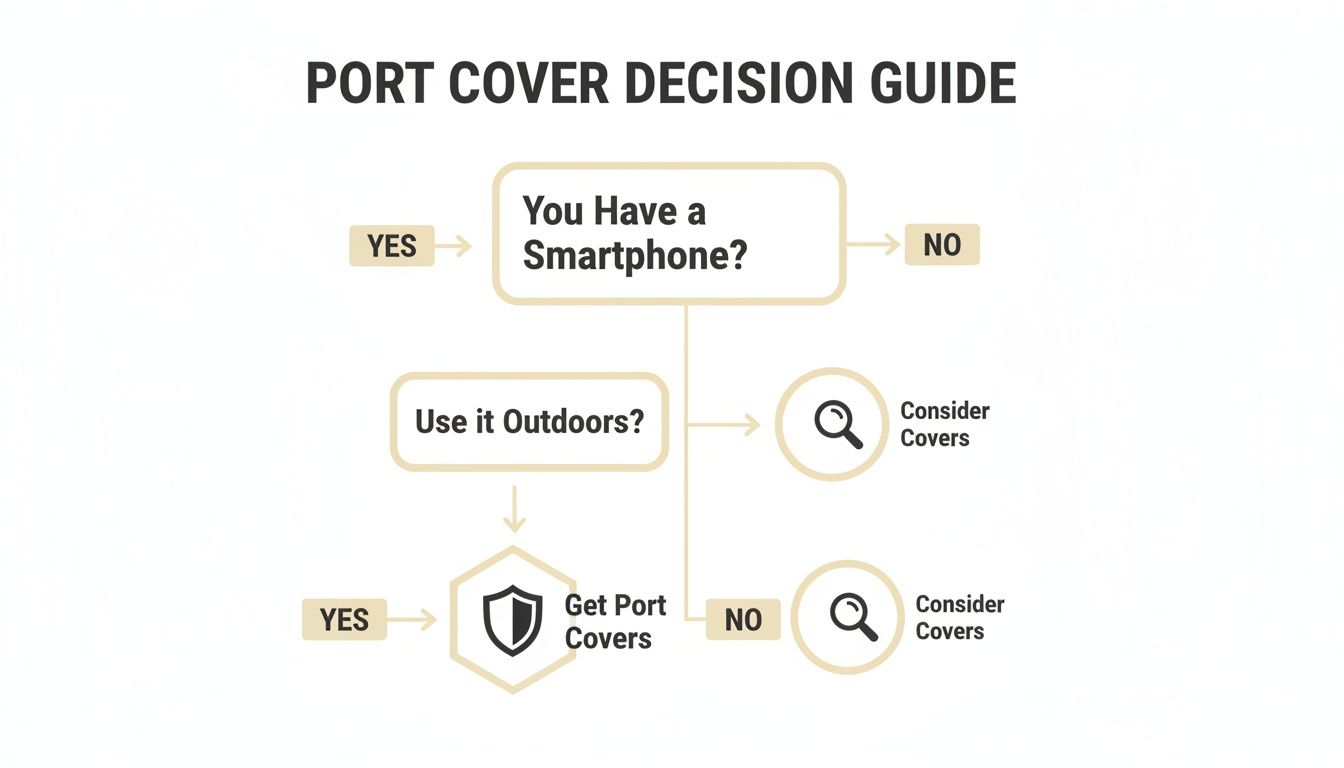
As you can see, for anyone who spends time outdoors or works in dusty environments, port covers are a no-brainer. They're your first line of defense against the elements.
Your Port Cover Buying Checklist
When you're comparing cases, zero in on the material, the design, and the overall build quality. These are the things that dictate how well the covers work and how easy they are to live with. Use this checklist to make a smart choice:
- Cover Material Matters: Is it a flexible silicone flap or a hard plastic plug? Silicone is usually easier to flick open and shut, but a rigid plug often creates a tighter, more secure seal. Your choice really boils down to whether you value quick access over maximum protection.
- Ease of Access: How annoying is it to open the cover when you need to charge your phone? Look for a small tab or a little indent that lets you pop it open without a fight. If you need a tool or Herculean strength to pry it open, you'll start hating it by day two.
- Precision Fit and Seal: The cover needs to sit flush in the port, creating a complete seal. Check for any visible gaps around the edges where dust or a splash of rain could sneak in. This is one of the clearest signs of a high-quality, well-made case.
- Durability of the Hinge: For hinged flap designs, that tiny connection point is the most common point of failure. Make sure the material feels thick and flexible enough to handle being opened and closed hundreds of times without getting weak or tearing off.
A well-engineered port cover feels intentional, not like an afterthought. It should open with minimal effort but seal securely with a satisfying click, giving you confidence that your ports are genuinely protected.
Comparing Port Cover Styles For Your Phone
To help you decide, let's compare the most common types of port covers you'll find out there. Each one has its own set of trade-offs between accessibility and how much protection it offers. This table breaks it all down to help you choose the best fit for your needs, balancing protection, accessibility, and durability.
| Feature | Hinged Flap Covers | Removable Plug Covers | Sliding Covers |
|---|---|---|---|
| Accessibility | Excellent: Easy to open and close with one hand. | Fair: Can be tricky to remove and very easy to lose. | Good: Simple sliding mechanism, but can be stiff at first. |
| Protection Level | Good: Offers a solid seal against dust and splashes. | Excellent: Creates the tightest possible seal against fine particles. | Good: Effective at blocking debris, but may have small gaps. |
| Convenience | High: The cover is attached, so you can't lose it. | Low: That separate plug is just waiting to be misplaced. | High: Integrated into the case, so there are no loose parts. |
| Durability | Good: The hinge is a potential weak point over time. | High: Simple design with no moving parts to break. | Good: The sliding track can wear out or collect grit. |
Ultimately, the best phone case with port covers is the one that fits your life. If you're a contractor on a dusty job site, a case with removable plugs might be exactly what you need. But for most of us just trying to keep pocket lint out, a convenient hinged flap is probably the smarter choice.
For a deeper dive into safeguarding your device, check out our article on why your foldable phone needs foldable protection. By taking a moment to think through these factors, you can find a case that offers real peace of mind without getting in your way.
Why the Foldable Market Is Driving Demand for Better Protection
Foldable phones are no longer just a cool gadget for tech enthusiasts. They've officially hit the mainstream, and this explosion in popularity is completely changing what people look for in a phone case. A cheap plastic shell just doesn't cut it anymore.
As these incredible devices become more common, owners are having a very quick reality check: a generic case won't protect their investment. A foldable phone isn’t just for calls and texts; it’s a serious piece of engineering with a price tag to match. That high value is naturally creating a huge demand for premium protection, and a phone case with port covers is a massive part of that conversation.
The New Standard of Care for Premium Devices
The rise of foldables has created a smarter, more cautious buyer. We now understand that these phones, with their complex hinges and beautiful, flexible screens, have weak spots that traditional phones don't. That awareness goes beyond the screen and hinge—it includes every single opening on the device.
This shift is really all about protecting an asset. You wouldn't leave a luxury car with the windows rolled down, right? In the same way, foldable owners are no longer willing to leave their phone's delicate internal parts exposed to the world. They're actively searching for cases that offer true, 360-degree security.
Protecting a foldable phone requires a more thoughtful approach. It’s not just about surviving a drop; it’s about preserving the device’s complex mechanics and long-term functionality. Sealing off the ports is a critical piece of that comprehensive protection strategy.
Market Growth Proves the Need for Advanced Protection
The numbers don't lie. The foldable smartphone market isn't just growing—it's expanding at an unbelievable rate, creating a whole new wave of users who need and want better accessories. This isn't a small trend; it's a market-wide shift that confirms you're making the right call by looking for advanced protective features.
The global foldable smartphone market was valued at USD 34,650.0 million in 2024 and is expected to more than double, hitting USD 74,020.1 million by 2030. That's a compound annual growth rate of 12.6%, which signals a powerful and lasting move toward these devices. You can explore more about these market projections and what they mean for the future of mobile tech.
This boom means that features once seen as "extra," like built-in port covers, are quickly becoming a baseline expectation for anyone serious about protecting their phone.
Why Standard Cases Are No Longer Enough
A simple slip-on case might prevent a few scratches, but it does almost nothing to guard against the real threats that can take down a high-end foldable. Standard cases leave the most critical entry points—the charging port and speaker grilles—wide open to attack from dust, pocket lint, and moisture. For a device where every single component is precision-engineered, that's a huge gamble.
This reality has led to a surge in demand for cases that offer:
- Complete Enclosure: Cases that wrap around the entire device, leaving no part exposed to danger.
- Hinge Protection: Specialized designs built to shield the most intricate and vital part of a foldable.
- Sealed Ports: Integrated flaps or plugs that stop contaminants from getting inside and causing serious damage.
Choosing a phone case with port covers isn't being overly cautious anymore. It's a smart, forward-thinking move that lines up perfectly with where mobile technology is headed. As more and more people embrace the power of foldables, the demand for truly protective and well-designed accessories is only going to climb.
How Consumer Trends Show a Shift Toward Functional Cases
Let's be honest: the days of picking a phone case based on color alone are long gone. The modern smartphone owner has evolved. They’re more informed, more invested, and frankly, they demand more from their accessories. This isn't just a small change—it's reshaping the entire mobile accessory market, steering it away from simple looks toward rugged, real-world functionality.
Today’s consumer doesn't just see a phone; they see a thousand-dollar-plus investment. With flagship devices carrying hefty price tags, people are actively looking for cases that offer complete, 360-degree protection. It’s no longer just about surviving a drop. It’s about preserving the device's long-term health and resale value, and that absolutely includes guarding its most vulnerable entry points.
The Rise of the Educated Buyer
Years of dealing with lint-clogged charging ports and surprise moisture damage have created a generation of savvy phone owners. They’ve learned the hard way that the biggest threats aren't always dramatic falls, but the slow, creeping damage from everyday life. This hard-won knowledge is pushing them past generic, off-the-shelf options and toward specialized solutions that solve real problems.
Because of this, features that were once considered niche are now seen as essential. A phone case with port covers is the perfect example of this shift. It's a direct answer to a well-known frustration, offering a practical defense that clicks with anyone who's ever had a port fail on them.
This trend is clearly visible in the massive growth of the mobile accessory market. Projections show the global market for mobile cases and covers is set to jump from USD 27.3 billion in 2025 to a staggering USD 47.1 billion by 2035, climbing at a steady 5.6% each year. This boom isn't just from new phone sales; it’s fueled by a customer base that's willing to spend more on higher-quality, feature-rich protection. You can discover more insights about these market trends to get the full picture.
Functionality Is the New Premium
This demand for real-world function has created a clear divide in the market. While cheap, basic cases are still out there, it's the premium, purpose-built cases that are grabbing all the attention and a bigger slice of consumer spending. Today's buyer is happy to pay more for a case that actually does more.
Here are the key functional features that modern consumers are actively hunting for:
- Integrated Port Protection: Covers for charging ports and headphone jacks are a top priority for keeping out dust, lint, and moisture.
- Military-Grade Drop Standards: Certifications like MIL-STD-810G are no longer just for bulky "rugged" cases but are fast becoming a baseline expectation for any premium model.
- Enhanced Grip and Ergonomics: Smart textures and materials designed to prevent slips are highly valued. After all, the best protection is not dropping your phone in the first place.
- Hinge and Screen Safeguards: In the growing foldable market, specialized protection for the most delicate moving parts is an absolute must-have.
Choosing a phone case with port covers isn't just an upgrade; it's an alignment with the habits of the most knowledgeable consumers. It signals an understanding that true protection is about defending against all threats—the big, the small, the seen, and the unseen.
Ultimately, this trend is a win for everyone. It forces manufacturers to innovate and create better, more thoughtful products. And it empowers you, the user, to make smarter choices to protect your expensive tech. By prioritizing a phone case with port covers, you’re joining a growing movement of people who demand more than just style—they demand substance.
Simple Maintenance for Your Protective Phone Case
Your protective case is your phone's tireless bodyguard, but even the toughest armor needs a little TLC to stay in fighting shape. A few minutes of simple, regular maintenance can make a huge difference in the life of your phone case with port covers, ensuring it keeps providing the reliable protection you bought it for. Think of it as a quick check-up to keep its defenses strong.
If you let it go, you risk the very problems you were trying to prevent. A dirty or worn-out port cover becomes less effective, eventually letting in the same dust and debris it was designed to block.
Keeping Your Port Covers and Ports Clean
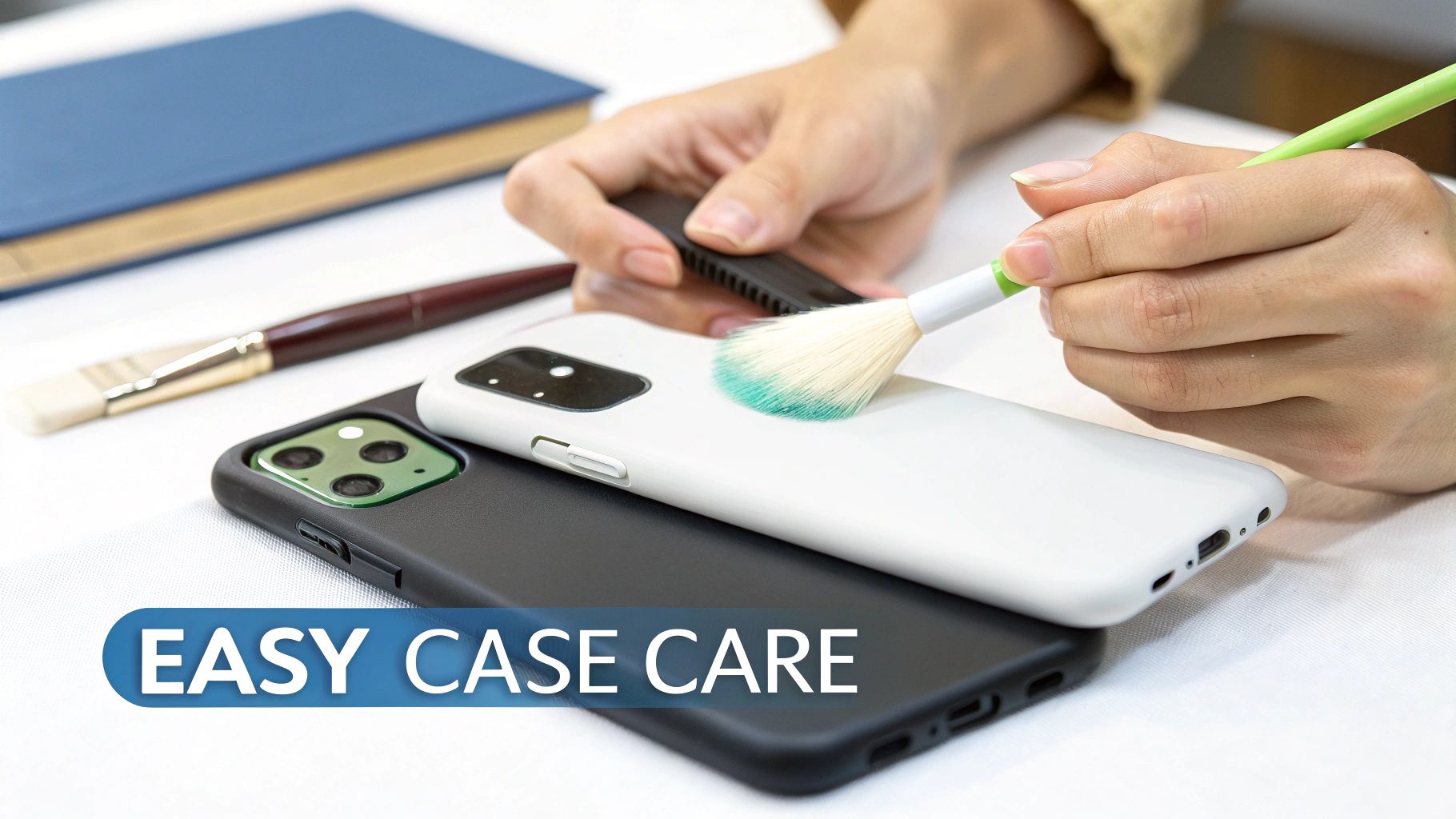
Over time, it's inevitable that dust and pocket lint will build up around the edges of the port covers. Some can even sneak into the port itself when you open it to charge. Cleaning them the right way is crucial. Whatever you do, never use sharp metal objects like paper clips or pins—they can easily scratch and permanently ruin the delicate charging contacts inside.
Instead, stick to this safe and effective cleaning routine:
- Remove the Case: Always take your phone out of its case first. This lets you clean each part separately and stops you from accidentally pushing debris deeper into the phone's ports.
- Use Compressed Air: A few short bursts of canned air work wonders for blowing out loose dust from the phone's charging port and all the little crevices in the case.
- Employ a Soft Brush: For more stubborn, packed-in grime, a clean, dry, soft-bristled brush is your best friend. A new toothbrush or a small, clean paintbrush is perfect for gently dislodging packed-in lint without causing any damage.
- Wipe Down the Case: Grab a microfiber cloth and slightly dampen it with isopropyl alcohol. Use it to wipe down the port covers and the rest of the case to get rid of oils and sticky residue.
This process isn't so different from making sure a screen is perfectly clean before applying a screen protector. If you're looking for more tips on keeping your device spotless, you can learn about dust-free installation for tempered glass in our detailed guide.
Pro Tip: When cleaning a hinged port cover, pay close attention to the small connection point. Gently brushing this area prevents grit from accumulating, which is what often causes a hinge to wear out and break prematurely.
Inspecting for Wear and Tear
Make a habit of checking your port covers for signs of damage, especially if you're plugging in your phone frequently. Look for any small tears in the material or feel if a hinged flap has become loose. If a cover no longer seals up nice and tight, its ability to protect against moisture and fine particles is seriously compromised. Catching this early is the key to keeping your phone fully guarded.
Common Questions About Phone Cases with Port Covers
Even after laying out all the benefits, it's totally normal to have a few questions. When you're thinking about adding a new feature to your daily tech, the little details are what really count. Let's tackle some of the most common worries people have about phone cases with port covers to clear the air.
A lot of people are concerned that a port cover will just get in the way of wireless charging. It’s a fair question—will that extra little flap of silicone or plastic mess with the connection?
The good news is, for any well-designed case, the answer is a solid no. Port covers are made to seal the charging port itself, not to cover the whole back of the phone where the wireless charging coil lives. The materials are thin and non-metallic, so they won't disrupt the magnetic field needed for a good charge. You can keep the convenience of drop-and-go charging while your port stays safe.
How Annoying Are They To Use Daily?
Another big question is about day-to-day use. Nobody wants to fight with their phone case every single time they need to plug in a cable. "Is it a pain to open the cover?" is something we hear all the time.
Quality cases are built with this exact problem in mind. Most have a small, flexible tab or an indent that lets you flick the cover open with a fingernail. The whole point is to create a seal tight enough to stop dust, but not so tight that it drives you crazy every day. After a day or two, opening the flap becomes second nature—a tiny extra step for some serious long-term protection.
The best port covers strike a perfect balance: they feel secure and protective when closed but open with minimal effort when needed. It should feel like an intentional design feature, not a cumbersome obstacle.
Do They Really Stop Fine Particles Like Sand?
This is the ultimate test for any protective gear: does it hold up when things get messy? Can a simple port cover really stop something as invasive as fine sand at the beach?
Yes, it absolutely can—if the case is made well. A precision-engineered phone case with port covers creates a tight seal that blocks even microscopic particles from getting in. This is huge, because a single grain of sand in a USB-C port can wreck the delicate connectors inside, often for good. For anyone who works outside or loves an adventure, this isn't just a bonus feature; it's a must-have.
This need for specialized protection is even more critical in the competitive foldable market. For instance, Huawei's high-end Mate XT phone pulled in over 4 million pre-orders, showing just how much people are willing to invest in advanced devices. As that investment grows, so does the need for cases that offer real-world defense. You can read more about the evolving foldable market and how it's shaping accessory demand.
At FoldifyCase, we design our cases to answer these questions before you even have to ask. Our protective solutions for foldable devices feature precisely molded port covers that offer maximum protection without sacrificing convenience. Explore our collection and give your investment the complete, 360-degree security it deserves at https://www.foldifycase.com.