






Will Any Case Fit the iPhone Ultra? What the Leaked Dimensions Actually Tell Us
Apple unveils its first foldable on 9 September. We design foldable cases for a living — here is what the reported dimensions mean for whether anything will fit it, why the camera...
 Editorial
Up front: We design cases for the Samsung Galaxy Z Fold line. We do not make an iPhone case, and we have never held Apple's foldable — nobody outside Apple has. Everything below is drawn from published reports and clearly labelled as such. Apple confirms the device on 9 September 2026. Until then, treat every number here as a well-sourced estimate rather than a fact. Last updated 15 August 2026.
The question we get most often at the moment is some version of: will my case fit the new iPhone, and can I buy one before it ships? The honest answers are no and no — but the reasons why are genuinely interesting if you care about how these things are made.
The reported dimensions

Multiple outlets have published figures traced to internal drawings and supply-chain sources. They cluster tightly enough to be useful, and they disagree enough that you should hold them loosely.
| Measurement | Reported figure | Confidence |
|---|---|---|
| Thickness, unfolded | ~4.5 mm (some reports 4.7–4.8 mm) | Multiple independent sources, small spread |
| Thickness, folded (body only) | ~9.4–9.5 mm | Reported from internal drawings |
| Maximum thickness incl. camera bump | ~13.9 mm | Reported, single main source |
| Inner display | 7.76 in, 2,713 × 1,920 | Consistent across reports |
| Outer display | 5.49 in, 2,088 × 1,422 | Consistent across reports |
| Crease depth | Under 0.15 mm | Claimed, unverifiable pre-launch |
Note what is missing from that table: height and width. Almost every published figure concerns thickness and screen diagonal. The two numbers a case designer needs first — the folded footprint in millimetres — are the ones nobody has reliably leaked.
That absence is why no honest brand can claim a validated fit today.
The 13.9 mm problem
If one number from the reports matters more than the rest, it is this one.
The body is reportedly around 9.4 mm folded. The maximum thickness including the camera bump is reportedly around 13.9 mm. That is a camera island standing roughly 4.5 mm proud of the back panel — a bump about as thick as the entire unfolded device.
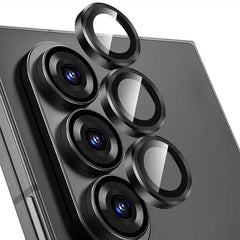
For case design, camera-island geometry is the single most expensive part of the tooling and the least forgiving. A case has to clear the bump, hold a raised protective lip above the lens glass, and do both without adding so much bulk that the phone stops closing flat. On a bump that tall, those goals fight each other harder than on any current foldable.
It also means something practical for owners: a phone that thick at the camera will rock heavily when placed face-up on a table, and the lens glass will sit closest to the surface when placed face-down. Both are arguments for a case with a genuinely raised bezel — whichever brand you eventually buy from.
Thin, but only in one dimension
At a reported 4.5 mm unfolded, Apple's foldable would be roughly 0.3 mm thicker than the Galaxy Z Fold 7, and a little thicker than the Z Fold 8 Ultra's reported 4.1 mm.
That is a headline number, and it will be used heavily in marketing. It is also the least relevant figure for whether a case fits. Cases are tooled around the folded profile, the camera island, the hinge spine and the button positions. Unfolded thinness affects how the case feels in the hand when open; it does not determine fit.
Will a Galaxy Z Fold case fit the iPhone Ultra?
No. Not loosely, not with trimming, not any of them.
Here is the reasoning rather than just the assertion:
- Different folded footprint. The Z Fold 8 Ultra's folded profile is reported at roughly 158.4 × 72.8 mm; the base Z Fold 8 at roughly 123.9 × 81.9 mm. Apple's device is a third geometry again, and every case is moulded to one specific footprint.
- Completely different camera island. A Z Fold case has a cutout shaped for Samsung's vertical triple-lens arrangement. Apple's is reported as a dual 48 MP layout in a different position and a far taller bump.
- Different button layout. Apple is reported to be using a Touch ID power button rather than Face ID. A power button that is also a fingerprint sensor needs a precisely sized cutout, not a covered membrane — get it wrong and the sensor stops reading.
- Different hinge spine. Hinge geometry is bespoke to each manufacturer. It is roughly 40% of the engineering time on a foldable case and none of it transfers.
The only thing likely to carry over conceptually is USB-C, and a port cutout is the cheapest part of any case.
Why nobody will have a good case on launch day
You will see iPhone Ultra cases listed within hours of the keynote. Some will even ship. We would be cautious about all of them, and we would say the same if we were selling one.
Case tolerances are validated against physical retail units, not CAD renders and not leaked schematics. The workflow is: get a real device, measure it, adjust the tooling, run samples, check the fit, then produce. Brands that list on day one have skipped the measuring step and are betting on leaked drawings being right.
Sometimes that bet pays. More often you get a case that is 0.4 mm out somewhere it matters — a camera cutout that shadows the ultrawide, a power button that needs pressing twice, a case that bows slightly when closed.
Our own timeline for a new device is typically three to four weeks from retail availability to a case we are willing to sell. That is not caution for its own sake; it is the minimum time to measure a real unit and correct the tooling.
What we would do if we were buying
- Buy Apple's own case at launch if you need protection immediately. Whatever else is true, Apple has measured the device.
- Wait three to four weeks for third-party options. That is roughly when validated cases from specialists start appearing.
- Prioritise the camera bezel. On a reported 13.9 mm maximum thickness, lens protection matters more than usual.
- Check the Touch ID cutout specifically. A covered or undersized power button is the most likely early design failure on this device.
- Do not buy a case before the phone. Reviews shift the verdict on accessories too.
iPhone Ultra case FAQ
How thick is the iPhone Ultra?
Reports put it at approximately 4.5 mm unfolded and 9.4–9.5 mm folded, with maximum thickness including the camera bump at around 13.9 mm. Apple has not confirmed any of these figures — expect confirmation at the 9 September event.
Will Samsung Galaxy Z Fold cases fit the iPhone Ultra?
No. The folded footprint, camera island geometry, hinge spine and button layout are all different. No Z Fold case from any brand will fit, and the reverse is also true.
When will iPhone Ultra cases be available?
Apple's own cases should be available at launch. Third-party cases will be listed immediately but validated ones — measured against a real retail unit — typically take three to four weeks after retail availability.
Is the iPhone Ultra called the iPhone Fold?
"iPhone Fold" is the name that circulated through the rumour cycle. Reporting now points to iPhone Ultra as the likely official name. Apple confirms on 9 September. You will see both names used interchangeably for some months.
Does the iPhone Ultra have Face ID or Touch ID?
Reports indicate Touch ID via the power button rather than Face ID, on the basis that the folded design leaves no room for the TrueDepth array. For case buyers this matters — the power button cutout has to leave the sensor fully exposed.
Will FoldifyCase make an iPhone Ultra case?
We have not committed to it. We are a Samsung Galaxy Z Fold and Z Flip specialist, and adding an entirely new tooling programme is a significant decision. If we do, it will be after we have measured a retail unit — not before. Join the list below and we will tell you either way.
The short version
Apple's foldable looks, on the reported numbers, like a genuinely well-engineered piece of hardware — thin unfolded, a claimed sub-0.15 mm crease, and a hinge Apple has taken years to get comfortable with. The 13.9 mm camera bump is the awkward part, and it is the part that will define what a good case for it looks like.
But no case exists yet that has been fitted to a real one, because no one outside Apple has held a real one. Anyone telling you otherwise before 9 September is guessing from the same leaked drawings we are — they are just not admitting it.
If you want to know when properly validated cases become available, including whether we make one, join our launch list. We will not email you before there is something real to say.
Related reading
- iPhone Fold or iPhone Ultra? What Apple Will Actually Call It
- The Best iPhone Fold Cases: What to Look For
- Galaxy Z Fold 8 vs iPhone Fold: A Case Designer's Diff
- What Actually Breaks First on a Foldable
Sources
- Notebookcheck — Confidential docs leak: 9.4 mm design
- PhoneArena — New iPhone Ultra schematics leak
- PhoneArena — Battery capacity and thickness details
- Android Authority — iPhone Ultra leak reveals foldable design
- Macworld — iPhone Ultra: design, specs and rumours
- MacRumors — iPhone Fold: everything we know
- TechRadar — On thickness versus the Galaxy Z Fold 7
iPhone Fold waitlist
Be first to know — whatever they call it
Fold, Ultra, or something nobody guessed — when Apple’s foldable lands and real cases follow, you’ll get one email. No spam, no renders.
Cases engineered
for the fold.
12 foldable-specialist designs — magnetic, hinge-cover, slim & S-Pen — each moulded to your exact model, not adapted from a slab-phone case.
Shop all 12 cases


